
All Scholars
INGLIS, Alexander James
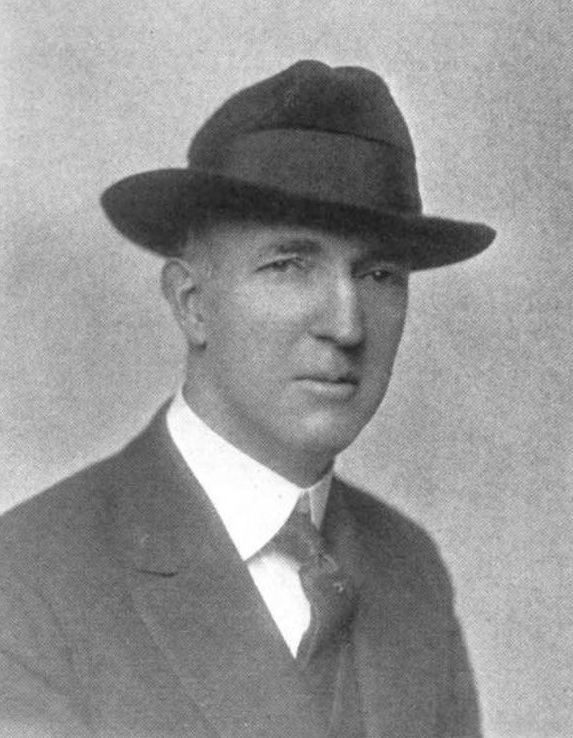
- Date of Birth: November 24, 1879
- Born City: Middletown
- Born State/Country: CT
- Parents: William Grey, worker in a gold-and silver-plating factory, later owner of a laundry business, & Susan Byers I.
- Date of Death: April 12, 1924
- Death City: Boston
- Death State/Country: MA
- Married: Antoinette Clark, December 20, 1911.
- Education:
Middletown High School, 1898; B.A., Wesleyan U. (CT), 1902; fellow, ASCSR, 1905; M.A., Columbia U. Teachers College, 1909; Ph.D., 1911.
- Dissertation:
"The Rise of the High School in Massachusetts” (Columbia, 1911).
- Professional Experience:
Teacher (Latin), Kiski School (Saltsburg, PA) 1902-3; Horace Mann School (New York City), 1903-11; Headmaster, Belmont School, Belmont, CA, 1911-12; prof. education, Rutgers College (now University), 1912-14; asst. prof. Education, Harvard, 1914-19; prof., 1919-24.
- Publications:
Key to Pearson's Latin Prose Composition, with Henry Carr Pearson (New York: American Book Company, 1904); First Book in Latin, with Virgil Prettyman (New York: The Macmillan Company, 1906; repr. 1914, 1916); Exercise Book in Latin Composition (1908); High School Course in Latin Composition, with Charles McCoy Baker (New York: Macmillan, 1909; repr. 1912, 1913, 1916, 1920, 1929); School Reports in Westchester County: A Study of Local School Conditions (White Plains, NY: Westchester County Research Bureau, 1912); A Survey of Educational Institutions of the State of Washington, with Harold W. Foght & Samuel Paul Capen (Washington, D.C.: Government Printing Office, 1916); Principles of Secondary Education, Riverside Textbooks in Education series, ed. E. P. Cubberley (Boston and New York: Houghton Mifflin Company, 1918); Virginia Education Commission. Virginia Public Schools: Education Commission's Report to the Assembly of Virginia. Richmond, Va.: Everett Waddey Company, 1919. Intelligence Quotient Values(Cambridge, MA: Harvard U. Press, 1921); Inglis Intelligence Quotient Values (Yonkers-on-Hudson, NY: World Book Co., 1922; 2nd ed., 1938); Psychological and Educational Tests in the Public Schools of Winchester, Virginia, with Walter F. Dearborn (Charlottesville: The University of Virginia, 1922).
- Notes:
Alexander Inglis had a short career of a bit more than a decade at the university level, but he was highly influential in the development of American secondary-school standards during his lifetime and again 70 years after his death. He began his teaching career as a traditional Latin teacher in Pennsylvania, but a trip to Pompeii and Rome in 1905 awakened him to the value of incorporating ancient culture into the teaching of Latin. He wrote well-received and often-reprinted Latin textbooks. He began to move away from the elitism of Latin instruction for the college-bound during his years at the progressive Horace Mann School in New York. After a decade in the schools, Inglis felt that he could more effectively put his ideas into practice at the national level if he held a university position.
After completing his doctoral work at Columbia’s Teachers College, he was offered professorships first at Rutgers and then at Harvard. His dissertation surveyed the Massachusetts school system and Inglis realized that his teaching of the traditional classical curriculum in the schools along with his understanding of the developing professionalism of the field of education, gave him appropriate resources for evaluating the school systems of other states. The textbooks ceased and he became a leading advocate for surveys of state school systems, conducting model surveys of a county in New York State, then all of Washington State, South Dakota, Indiana, and Virginia.
In 1918 he produced his seminal work, Principles of Education, which formalized his views on the value of secondary education for all young people, not just for those intent on college. The three “aims” of his curriculum were: 1) preparing citizens (social-civic), preparing workers (economic-vocational), and personal development (individual). His plan to place students in appropriate tracks based on their results from IQ tests, then in an undeveloped and culturally biased form, would later be rejected as unfairly based on class and race. In the same year these goals were echoed in the report committee of the National Education Association Cardinal Principles of Secondary Education, to which Inglis contributed substantially. The report proposed that a curriculum should prepare students to be informed and responsive citizens of a democracy. While Inglis’s proposals (and those of other progressives) broadened the American curriculum, it tended to put academic courses at or below the value of vocational and civic courses.
Inglis did not live long enough to revise or expand Principles. He exercised influence in his surveys of secondary education systems under the aegis of the US Department of Education for the State Commission of Educational Survey. He was an important but not a major figure of his time and field, as were John Dewey (1859-1952), the eugenicist E.P. Cubberley (1868-1941) or the psychologist Edward Thorndike (1874-1949). After his death, Harvard’s Graduate School of Education created the Inglis Lectureship in Secondary Education.
Inglis’s proposals resurfaced in the 1990s when attacked by libertarians and advocates of homeschooling as promoting class affiliation, passive learning of an unfocused variety of subjects. John Taylor Gatto (1935-2018) in particular attacked Inglis’s Principles in his 2003 article “Against School,” in which he said that Inglis promoted a system “a fifth column into the burgeoning democratic movement that threatened to give the peasants and the proletarians a voice at the bargaining table.” Gatto listed Inglis’s six functions, each off which he counters. Inglis’s recent biographer William Wraga argues that his subject neither a humanist nor political manipulator.
Though largely forgotten today (with the exception above), Inglis nevertheless had a considerable influence on American education in establishing a comprehensive high school and making wide use of the school system survey.
- Sources:
Wesleyan University Bulletin 16, 2 (June 1922) 61; DAB; NatCAB 23:54; New York Times (April 13, 1924); John Taylor Gatto, “Against School,” Harper’s Magazine 307, no. 1840 (September 2001) 33-8; William G. Wraga, Progressive Pioneer: Alexander James Inglis (1879-1924) and American Secondary Education ([New York]: Peter Lang, 2007).
- Author: Ward Briggs