
All Scholars
ROBINSON, Thomas More
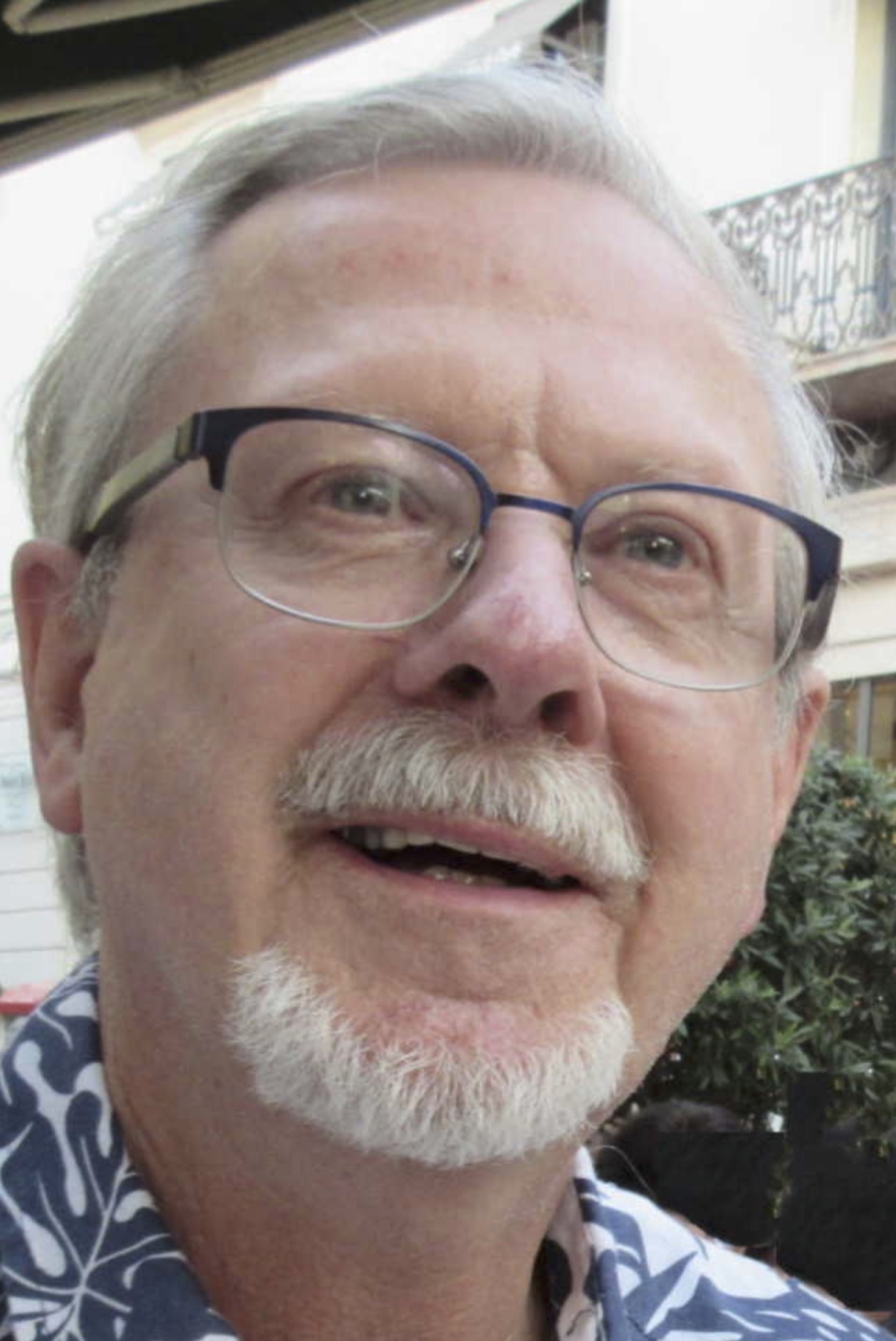
- Date of Birth: November 4, 1936
- Born City: Houghton-le-Spring, Durham
- Born State/Country: England
- Parents: Alban Bainbridge, fitter-driver in Electric Power Station, & Emily Evangeline Tolmie R.
- Date of Death: April 29, 2023
- Death City: Paris
- Death State/Country: France
- Married: Erna Lucille Newman Paris, April 26, 1981.
- Education:
B.A. (Honours, Class 1), Durham University, 1961; B. Litt., Oxford, 1965; study at Sorbonne, 1962-3; D. Litt. (hon.), University of Athens, 2001; D.S. Litt. (hon.) Trinity College, University of Toronto, 2008.
- Dissertation:
“An Examination of the Doctrine of “Psyche”, Individual and Cosmic, in the Writings of Plato,” (B.Litt, Oxford, 1965).
- Professional Experience:
Lectr., Calgary, 1964-8; asst. prof., Toronto, 1968-72; assoc. prof., 1972-84; professor (philosophy and classics) 1984-9; Chairman, Dept. Philosophy, Toronto, 1979–81; Dean, School of Graduate Studies, and prof. philosophy & classics, 1984-9; ed., Phoenix, 1971–6, 1977–8, as well as four Supplementary Volumes; co-founder and co-editor (with David Gallop) of the Phoenix Presocratics Series (six vols., 1978–2007); pres., Canadian Federation for the Humanities, 1988–90; pres., Society for Ancient Greek Philosophy, 1993–95; pres., International Plato Society, 1995–8; Honorary Pres., International Association for Greek Philosophy, 1993-2023; Aristotle Award, 1998.
- Publications:
Philostratos, Die Bilder (Munich: Heimeran, 1968); Plato's Psychology (Toronto: U. of Toronto Press, 1970; 2nd ed., 1995); Contrasting Arguments: An Edition of the Dissoi Logoi (New York: Arno Press, 1979; repr. 1984; The Greek Legacy (Toronto: CBC University Paperbacks, 1979); Heraclitus: Fragments. A Text and Translation with a Commentary (Toronto: U. of Toronto Press, 1987; 4th printing, 2003); Cosmos as Art Object: Studies in Plato's Timaeusand Other Dialogues (Binghamton, NY: Global Academic Publications (Binghamton University), 2004; repr. 2008); Logos and Cosmos (Sankt Augustin: Academia Verlag, 2008); As Origens da Alma: Os Gregos e o Conceito de Alma de Homero a Aristóteles (São Paulo: Annablume, 2010); The Olympic Plays (trans.) (Athens: Olympic Center for Philosophy and Culture, 2013); Plato's Second-Best Society (In Chinese.) (Beijing: Peking U. Press, 2014).
Major edited volumes
The Greeks and the Environment, co-edited with Laura Westra (Lanham, MD: Rowman & Littlefield, 1997); Plato: Euthydemus, Lysis, Charmides, co-edited with Luc Brisson (Sankt Augustin: Academia Verlag, 2000); Thinking about the Environment: Our Debt to the Classical and Medieval Past, co-edited with Laura Westra (Lanham, MD: Lexington Books, 2002); Logos and Cosmos: Studies in Greek Philosophy (Sankt Augustin: Academia, 2008); Cosmos as Art Object: Studies in Plato's Timaeus and Other Dialogues (New York: Global Academic Publishing, 2004); As origens da alma: os gregos e o conceito de alma de Homero a Aristoteles (São Paulo: Annablume, 2010); Plato's Sophist Revisited, co-edited with Beatriz Bossi (Berlin: De Gruyter, 2013); Plato’s Statesman Revisited, ed. with Beatriz Bossi (Berlin & Boston, 2018); Plato’s Phaedo: Selected Papers from the Eleventh Symposium Platonicum, ed. with Garbriele Cornelli (Baden-Baden: Academia, 2018); Plato’s Theaetetus Revisited, ed. with Beatriz Bossi (Berlin & Boston: De Gruyter, 2020);
Articles
“Soul and immortality in Republic X,” Phronesis 12 (1967) 147-51; “Demiurge and World Soul in Plato's Politicus,” AJP88 (1967) 57-66; “Ovid and the Timaeus,” Athenaeum 46 (1968) 256-60; “The Nature and Significance of the Argument for Immortality in the Phaedrus,” Apeiron 2 (1968) 12-18; “Deux problèmes de la psychologie cosmique platonicienne,” RPhilos 159 (1969) 247-53; “Soul and Definitional Priority. De an. 414a4-14,” Apeiron 4 (1970) 4-12; “Averroes, Moerbeke, Aquinas and a crux in the De anima,” Mediaeval Studies 32 (1970) 340-4; “Matthew de Varis and the Δισσοι λόγοι,” CQ 22 (1972) 195-8; “Parmenides on the Ascertainment of the Real,” CJPh 4 (1975) 623-33; “A Sophist on Omniscience, Polymathy, and Omnicompetence. Δ. Λ. 8.1-13,” ICS 2 (1977) 125-35; “The Argument of Tim. 27d ff.,” Phronesis 24 (1979) 105-9; “Quattro note sulla cosmo-teologia di Platone,” Discorsi 2 (1982) 113-20; “Tre concetti eraclitei,” Sandalion 5 (1982) 41-58; “Esiste una dottrina del logos in Eraclito?, I,” Atti del Symposium Heracliteum 1981, I: Studi, ed. Livio Rosetti (Rome: Ed. dell’Ateneo, 1983) 65-72; “Platone, Eraclito e la poesia greca,” Annali dell’Università degli Studi di Napoli “L’Orientale”/Dipartimento di Studi del Mondo Classico e del Mediterraneo Antico. Sezione Filologico-Letteraria, 6 (1984) 9-18; “Heraclitus. Some Soundings,” in Greek Poetry and Philosophy. Studies in Honour of Leonard Woodbury, ed. Douglas E. Gerber (Chico, CA: Scholars Press, 1984) 229-40; “The Timaeus on Types of Duration,” ICS 11 (1986) 143-51; “Plato, Heraclitus and Greek Poetry,” in Greek Tragedy and Its Legacy: Essays Presented to D. J. Conacher, ed. Martin Cropp, Elaine Fantham & S.E. Scully (Calgary, AL: U. of Calgary Press, 1986) 259-66; “Understanding the Timaeus, II,” in Proceedings of the Boston Area Colloquium in Ancient Philosophy, ed. John J. Cleary (Lanham, MD: University Press of America, 1987) 103-19; “Metodologia della lettura di Platone,” in Letture platoniche (Naples: Ed. Scientif. Ital., 1987) 25-40; “Professor Allen on Glaucon in the Republic,” in Justice, Law and Method in Plato and Aristotle, ed. Spiro Panagiotou (Edmont: Academic Printing and Publishing, 1987) 63-6; “Sobre la fecha de composición del Timeo,” in Platón : los diálogos tardíos. Actas del Symposium Platonicum 1986, ed. Conrado Eggers Lan (Mexico: Univ. Nac. Autón., 1987) 57-65; “Methodology in the Reading of Heraclitus,” in Ionian Philosophy, ed. Konstantinos I. Boudouris (Alimos: Intern. Assoc. for Greek Philosophy, 1989) 344-52; “Parmenides and Heraclitus on What Can Be Known,” RPhA 7 (1989) 157-67; “Plato on Forbidden and Unforbidden Love,” AFLS 11 (1990) 301-18; “The Relative Dating of the Timaeus and Phaedrus,” in Understanding the Phaedrus: Proceedings of the II Symposium Platonicum, ed. Livio Rosetti (Sankt Augustin: Academia, 1992) 23-30; “Plato and the Computer,” AncPhil 12 (1992) 375-82; “The World as Art-Objet: Science and the Real in Plato's Timaeus,” ICS 18 (1993) 99-111; “Aristotle, the Timaeus, and Contemporary Cosmology,” The Journal of Neoplatonic Studies 2 (1993-4) 3-19; “Matthew de Varis, corrector egregious,” Πλάτων: Δελτίον τῆς Ἑταιρείας Ἑλλήνων Φιλολόγων 46 (1994) 87-93; “Two Key Concepts in Plato's Cosmology,” Méthexis 7 (1994) 43-9; “Methodology in the Reading of the Timaeus and Politicus,” in The Third Way: New Directions in Platonic Studies, ed. Francisco J. González (Lanham, MD: Rowman and Littlefield, 1995) 111-18; “Forms, Demiurge and World Soul in the Politicus,” RPhA 13 (1995) 15-30; “Plato on Metempsychosis and the Concept of Appropriate Degradation,” Méthexis 10 (1997) 45-9; “As características definidoras do dualismo alma-corpo nos escritos de Platão,” LCláss 2 (1998) 335-56; “The Defining Features of Mind-Body Dualism in the Writings of Plato,” in Psyche and Soma: Physicians and Metaphysicians on the Mind-Body Problem from Antiquity to Enlightenment, ed. John P. Wright & Paul Potter (Oxford: Oxford U. Press, 2000) 37-55; “Socrates, Anaxagoras, nous and noesis,” in Plato's Phaedo: Proceedings of the Second Symposium Platonicum Pragense, ed. Aleš Havlíček & Filip Karfík (Prague: Oikoumene, 2001) 357-67; “The Argument for Immortality in Plato's Phaedrus,” in Essays on Plato's Psychology , ed. Ellen Margaret Wagner (Lanham, MD: Lexington Books, 2001) 323-33; “The Dissoi logoi and Early Greek Skepticism,” in Essays in Ancient Greek Philosophy. 6: Before Plato, ed. Anthony Preus (Albany: State U. of New York Press, 2001) 187-97; “Il Politico di Platone: il mito e le sue implicazioni cosmologiche,” SCO 49 (2003) 45-57; “Aristotle and the Pre-Socratics,” in Uses and Abuses of the Classics: Western Interpretations of Greek Philosophy, ed. Jorge J.E. Gracia & Jiyuan Yu (Aldershot & Burlington, VT: Ashgate, 2004) 37-46; “Socrates the Lover,” in Socrates: 2400 years since his Death: (399 B.C. – 2001 A.D.): international Symposium Proceedings, Athens-Delphi 13-21 July, 2001, ed. Vassilis Karasmanis (Athens: European Cultural Centre of Delphi, 2004) 107-10; “Plato on (Just About) Everything: Some Observations on the Timaeus and Other Dialogues,” in One Book, the Whole Universe: Plato's Timaeus Today, ed. Richard Daniel Mohr & Barbara M. Sattler (Las Vegas, NV: Parmenides, 2010) 101-15; “Socrates on Soul and Immortality,” in Il quinto secolo: studi di filosofia antica in onore di Livio Rossetti, ed. Stefania Giombini & Flavia Marcacci (Passignano sul Trasimeno: Aguaplano, 2010) 389-400; “Livio Rossetti and the International Plato Society,” in Il quinto secolo: studi di filosofia antica in onore di Livio Rossetti, ed. Stefania Giombini & Flavia Marcacci (Passignano sul Trasimeno: Aguaplano, 2010) 743-4.
Festschrift
Greek Philosophy in the New Millennium: Essays in Honour of Thomas M. Robinson, ed. Livio Rossetti (Sankt Augustin: Academia, 2004).
- Notes:
T.M Robinson was born the tenth of eleven children in a coal-mining town in northeast England. He left that environment for Oxford and in 1964 came to Canada where a stint at Calgary preceded his remarkably active 55-year career at Toronto. He maintained a prolific publication record while also contributing to the administration of his department as dean of the School of Graduate Studies and department chair and as editor of Phoenix (and four supplements) and presided over three international societies. In addition, later in his career he wrote 18 plays on Greek subjects that were performed in translation in Samos, Beijing, Toronto, Madrid, Caracas, and Bucharest, showing he could put classical material into accessible and engaging form. Perhaps his interest in playwrighting diverted his time and interest away from an original in-depth study of a single idea following Plato’s Psychology, an outgrowth of his Oxford thesis. He co-founded the Phoenix Presocratic series the Platonist David Gallop of Trent University and contributed his edition of Heraclitus’s fragments. The series aimed to make the presocratics accessible to students who had no previous knowledge of Greek or the presocratics. Through his many presentations at international conferences in Latin America and Asia, he extended the philosophical community throughout previously ignored parts of the world. Following the groundbreaking contribution of Plato’s Psychology early in his career, he fostered means through which Greek philosophy could speak to students and readers in his time, through his presocratic series, his leadership of learned organizations, and his playwriting.
- Sources:
DAS, 8th ed., 4; CanWhWh 2007, 1111.
- Author: Ward Briggs